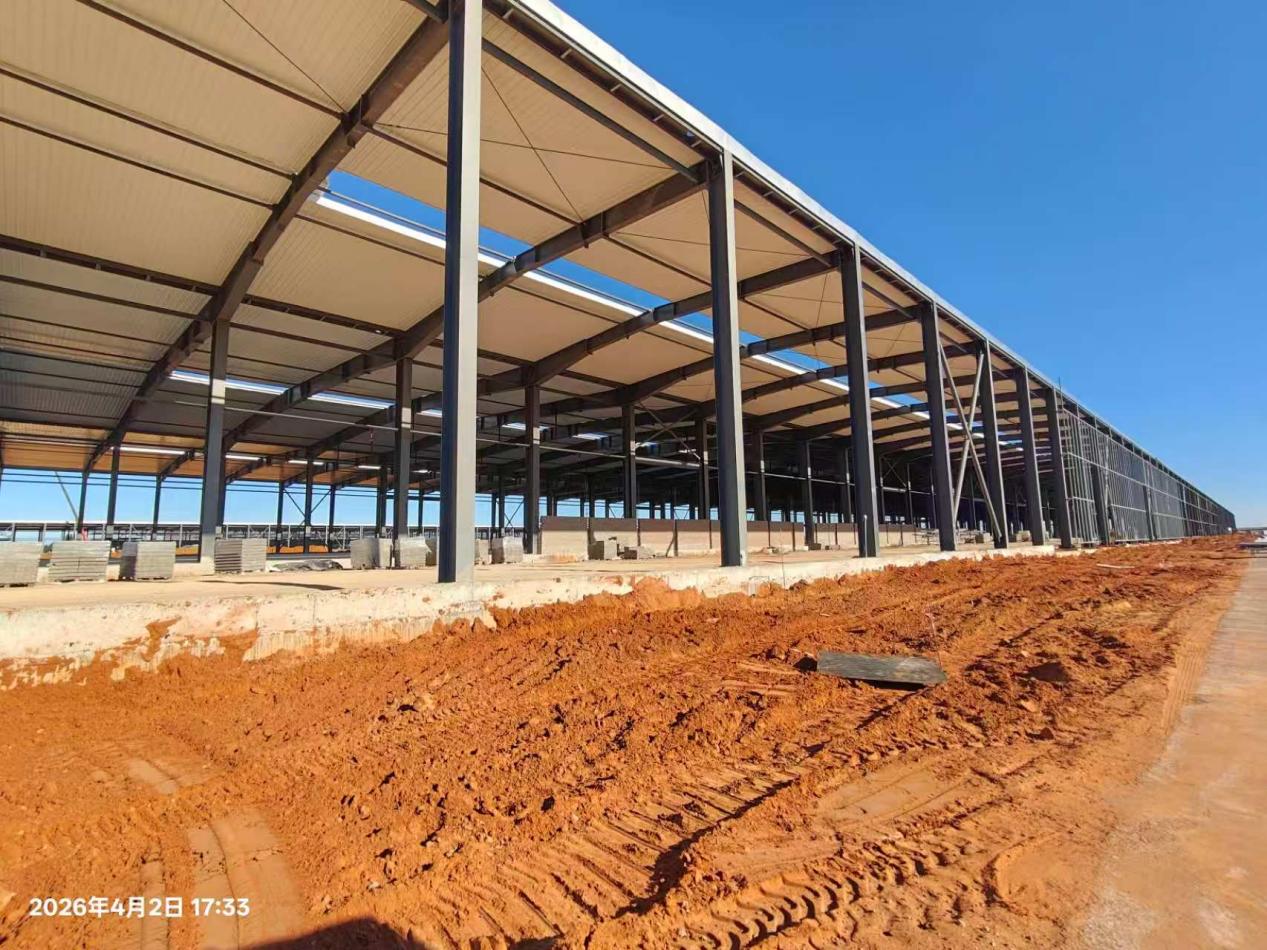
The Morocco branch of SWS Group undertook the main steel-structure works for the Gotion Morocco power-battery gigafactory. Located in the Kenitra Atlantic Free Zone, the project is Africa's first large-scale full-chain lithium-battery gigafactory and a key overseas capacity base for Gotion High-Tech serving the European EV and energy-storage markets.
Basic Project Information
- Positioning: Africa's first large-scale full-chain lithium-battery gigafactory and a core overseas production base in Gotion High-Tech's global layout.
- Location: Kenitra Atlantic Free Zone, Morocco, adjacent to the port. Sea freight from the Strait of Gibraltar to Spain takes about 14 hours, and industrial products can enter the EU market under free-trade arrangements.
- Project entity: Gotion Power Morocco S.A., wholly controlled by Gotion's German subsidiary. Morocco's national investment institution CDG Group provides supporting funding for Phase 1.
- Timeline: A cooperation memorandum was signed in June 2023, the investment agreement was signed in June 2024, Phase 1 started construction on May 21, 2025, and first-cell production is planned for the third quarter of 2026.
Investment and Capacity Plan
Phase 1 has a total investment of about EUR 1.28 billion and a planned annual capacity of 20 GWh for power and energy-storage lithium batteries. The project covers localized production across the chain, including cells, PACK, lithium iron phosphate cathode materials, and supporting anode materials. Once in operation, it is expected to create around 2,300 direct local jobs and drive the development of Morocco's new-energy industry cluster.
In the medium and long term, Phase 1 is planned to expand gradually to 40 GWh after production starts. The long-term overall plan reaches 100 GWh, with total investment of about EUR 6.5 billion, supporting battery demand for approximately 2 million electric vehicles after completion.
Products and Market Positioning
The project covers passenger-vehicle power batteries, energy-storage cells, liquid-cooling energy-storage systems, and key cathode/anode battery materials. It serves EU passenger vehicles, grid-scale energy storage, and commercial and industrial energy-storage scenarios. Around 85% of output is targeted at the EU market, with a smaller share supplied to North Africa and the Middle East, and the Morocco free-trade framework can support broader regional reach.
Morocco has abundant phosphate resources, making it an important source for lithium iron phosphate cathode materials and helping reduce upstream material transport cost. Its renewable-energy conditions also support lower-carbon battery manufacturing.
Value of the Steel Structure Works
A lithium-battery gigafactory places high demands on long-span space, production-line continuity, structural precision, and construction efficiency. SWS applied its industrial plant steel-structure detailing and construction capabilities to deliver a stable and efficient main plant structure, supporting the installation of cell, PACK, cathode, and anode production lines.
Strategic Significance
The project strengthens Gotion High-Tech's "Europe + North Africa" overseas capacity layout and improves localized supply capability for the EU market. It also fills the gap in large-scale power-battery manufacturing in Africa, supports the electrification of Morocco's automotive industry, and forms a shorter "North African raw materials - Morocco battery factory - European automakers" supply chain.
Supporting Energy-Storage Business
Gotion has also won the Morocco Midelt solar-plus-storage project, providing a 1.2 GWh energy-storage system. After the local factory starts production, regional production and delivery of energy-storage equipment can be realized, forming an integrated capability across battery manufacturing and energy-storage engineering.
